
The Small Scale
The folly of prioritizing the industrial at the expense of the artisanal

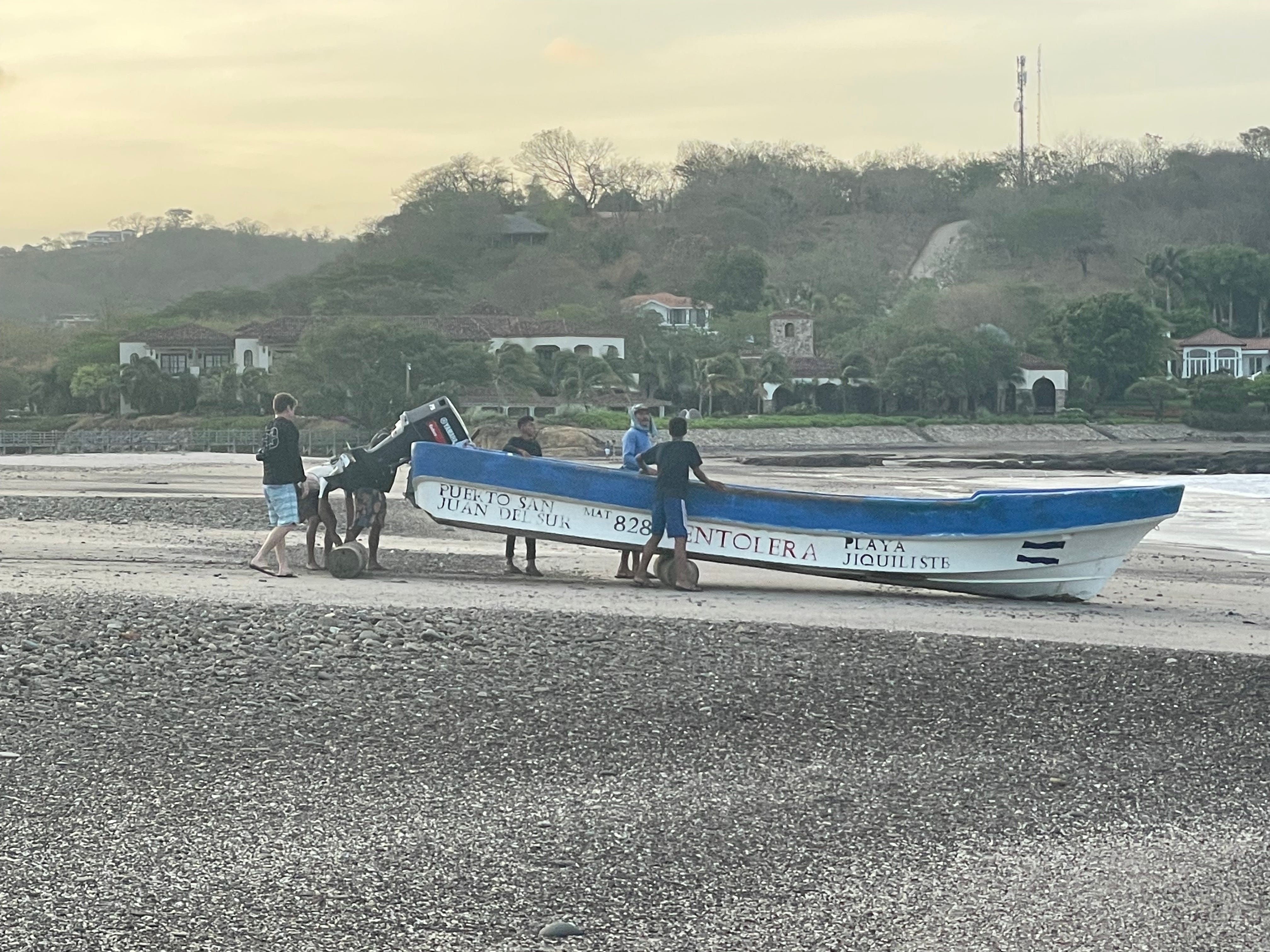
The fishermen I hoped to see this morning aren’t there, and I’ll have to find out why. Is it that the season has changed or the water? Is the tide wrong, or is the surf too big?
Most likely, it is the natural ebb and flow of life connected to the ocean. But such is the panic of our day. The knowledge that precarious systems are collapsing all around us.
As an outsider, my first reaction is that something must be wrong.
Confusion aside, my morning walk on the beach was an opportunity to reconnect. The resort I’m staying at is a vital part of that other significant segment of the ocean economy, coastal tourism.
Everyone has discussed the rebound in tourism, from the taxi driver to the bartender to the owner of the surf shop - true industry experts with their fingers on the pulse.
Tourism here is picking up for the first time in years, recovering from a double punch of government repression and the pandemic. This critical industry is so important to countries in the region, felt by a broad reach of the population.
+Travel and tourism as percentage of gross domestic product in Nicaragua - Statista
The hotel is beginning to gain the natural, slow buzz of activity. Workers are showing up for their day - laborers working across the street on an expansion project, noises starting to emanate along with the aromas of the kitchen.
The woman who runs the staff with a firm kindness coming out to greet me with a big, strong hug. She wasn’t here when I checked in yesterday.
Small Scale Sustainability
Lessons for a sustainable ocean economy are everywhere here, but the question lies in scalability. Feeding the fifteen people in a small seaside resort with fresh, locally-caught seafood is one thing. Delivering food to the rest of the country is another.
And food for New York City, Los Angeles, Lagos, and Beijing? Well, we all know where this is going. The ocean economy here is sustainable; the outside forces lead to the challenges.
While I might not be getting lessons in scalability, it is worthwhile to reconnect to the ocean and nature in general in this way. Surfing all day, eating a fresh seafood dinner that was caught by a local fisherman.
I struggle to connect with locals in a language I don’t fully understand and see the kindness in people living in this region that ranks among the most violent in the world outside of active war zones.
Reasons for gratitude are everywhere.
The Huge Cumulative Impact of the Small
Everything about my surroundings points to the small.
A small resort in a fishing village in a small country. A small-scale, local fishery provides meals. Crews of two or three, often what looks like fathers and sons, head out in small panga boats to fish near-shore waters. The lights on the boats dotting the water at night can be counted on the fingers of a couple of hands.
One thing you notice when you read reports on the fishing industry is the standard asterisk that notes, “This data does not include artisanal, small-scale fisheries.”
Collecting data from small-scale fisheries around the world is a complex undertaking, so most industry data instead tracks the industrial side - those few huge industrial fishing fleets that make up 60% of the global catch.
But at 40%, small-scale fisheries (SSF) add up. Small-scale fisheries, like the one providing my dinner each night, are too small and dispersed to put up a united political voice against their foes, yet in aggregate, are too large and important to ignore.
Here are some SSF stats from the FAO:
40% of total fisheries catch
492 million people partially depend on SSF
60 million people employed in SSF
50 million people engaged in subsistence fishing
379 million household members
USD 77 billion in first sale revenue
4 out of 10 people in SSF are women
+Illuminating Hidden Harvests: The contributions of small-scale fisheries to sustainable development - FAO
Despite the obvious benefits - food, employment, money, local economy, sustainable export dollars - these fisheries are under attack around the world by the other half of the fisheries industry as well as numerous other outside influences.
The industrial fishing fleet is a ruthlessly efficient extraction machine dominated by a few large companies. Actions by this segment of the industry easily threaten the other part. The big companies have concentrated profits, lobbyists, government agents, and agencies in their pockets.
From Cyclical Economy to Straight Line Dependence
A story from The Outlaw Ocean highlights how delicate this system is to these outsized, outside influences. In the book, author and NYT journalist Ian Urbina describes the destructive cycle of Chinese influence on national politicians in the Gambia, allowing factory-scale fishing in near-shore waters to feed a fishmeal plant.
This competition for resources is one the local fishermen and the entire economy built around them simply can not win. And when the near-shore fish disappear, the local ocean-based economy collapses with it while corporations and long-distance fishing fleets just move onto the next spot (until there are none left).
This imbalance in influence allows for this priority of the industrial at the expense of the artisanal and the short term at the cost of the sustainable.
The video below is worth watching. It is certainly an extreme example, but not a rare one.
This loss of the local economy has compounding effects. Loss of income from fishing means increased competition for scarce jobs on land. Loss of nearly free food means increased food costs for a population with little ability to absorb it.
The collapse of the environment and economy feeds emigration - dangerous journeys to countries increasingly putting up walls.
If we don’t want floods of people coming to our countries in the global North, it helps ensure people can eat in their own. If we don’t want 500 million more mouths to feed, protect local waters.
(The US alone spends about $4 billion annually on international food assistance programs - GAO)
Solutions in a Sustainable Blue Economy
Solutions to these issues are often more a matter of policy than business, but awareness is essential. We are collectively giving up on globalization, intervention, and looking outward in general. The ocean economy doesn’t exist in this walled-off world.
Also, while the aquaculture industry is the villain in this particular segment, a recurring theme in this newsletter is that aquaculture isn’t going anywhere. As the largest growing segment of the global food industry, it is essential to take on the challenges of aquaculture’s ecological and political footprint - and that’s where innovative companies are making a difference.
Aqua-Spark, the aquaculture-focused venture capital firm I’ve mentioned before, lists its portfolio of companies on its website. The theme is unmistakable - feed efficiency, fishmeal replacement, data, data, more data.
Technology is coming to this ancient industry, and efficiencies abound. The impact these companies are making is critically important, and the profit opportunities are commensurate with the scope of the markets they are addressing and the challenges of the places they are operating within.
+eFishery: An aquaculture unicorn - Emerging Oceans
It won’t solve the immediate problem for the local fishermen in the Gambia. But it’s inspiring to learn more about these companies and investors looking beyond the next social media app or finding new ways to monetize my data.
Small Countries, Global Forces
As I sit here underneath a palapa, sipping my coffee and pecking away at my keyboard, I have a view of the ocean to the horizon. Aside from the patio around me, that view hasn’t changed much in millions of years, giving the impression that the ocean is limitless.
Humans have made this mistake since the beginning.
+Fukushima wastewater released into the ocean, China bans all Japanese seafood - Reuters
But the rainy season hasn’t arrived as expected. You would expect daily rains at this time of year, but yesterday’s afternoon shower was the first in a few weeks. I brought up the recent news about the drought in Panama affecting the canal operations, but no one was aware of it.
There are limits, and the changes are happening unseen beneath the surface. The water is warmer and less clean, the schools of fish are smaller, and the boats that ply its surface may be less in number but are ruthless in their extraction efficiency.
And the locals have to fight tooth and nail for their food.